

MindsNet field notes / A human internet
Being online used to feel like a privilege. We want to make it one again.
A generation ago, getting online meant access: to knowledge, people, and possibilities your street could not contain. Today, many parents see the same act as exposure. That reversal should trouble everyone building technology.
By MindsNetJuly 18, 20266 min read
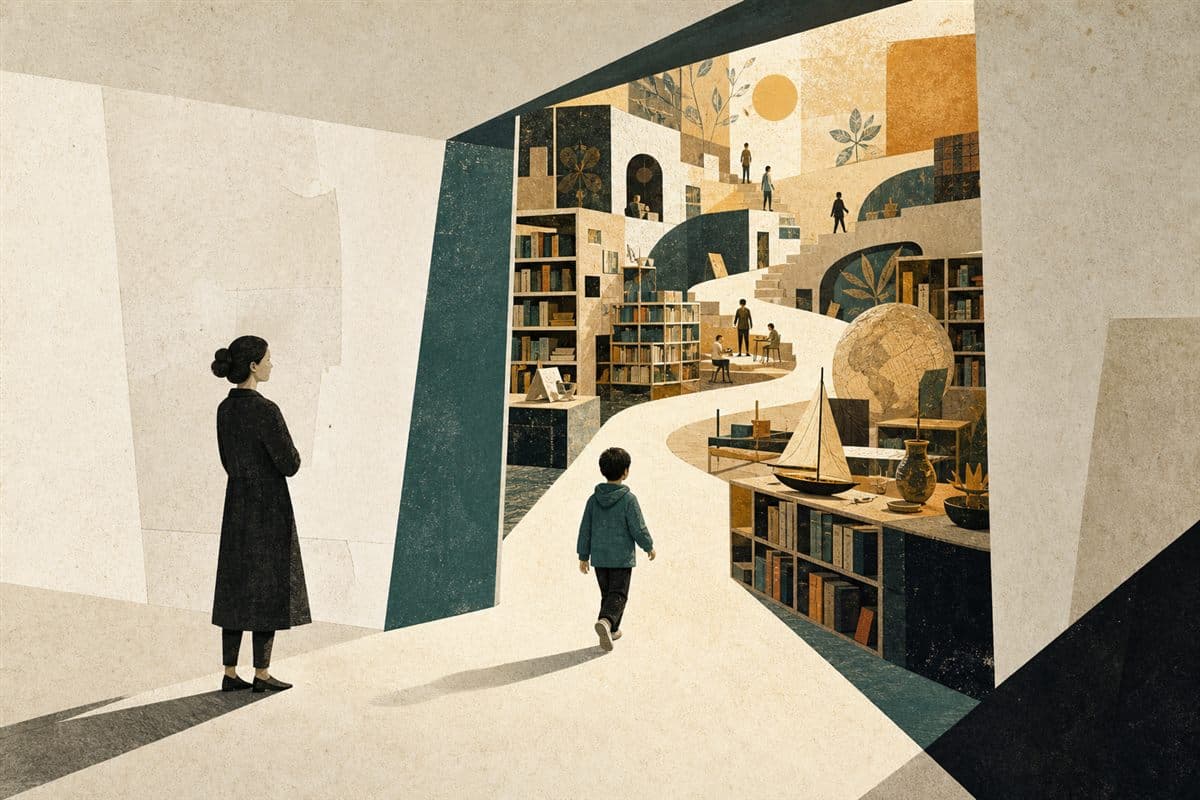
When I was a kid, being allowed on the internet felt like a privilege. The computer opened a world larger than the one around me. You could learn something nobody nearby knew, meet people who cared about the same strange subject, and follow curiosity farther than a schoolbook could take it.
Now the instinct has reversed. Parents negotiate screen time, brace for whatever a feed might serve next, and wonder whether a child will come back from an hour online more informed or simply more agitated. The network grew more capable, yet our confidence in what it does to a person collapsed.
the reversal
The internet did not become worse by becoming bigger
Scale gave us extraordinary things: free education, global collaboration, instant publishing, and access to almost any culture or craft. The problem was not that more people arrived. The problem was that discovery was steadily replaced by capture. Instead of asking what you wanted to find, the dominant products learned to decide what could hold you next.
A destination became a feed
You once went online with somewhere to go. Now a stream meets you first and supplies a reason to stay after you arrive.
Curiosity became engagement
A person following a question and a person trapped in outrage can look identical on a dashboard. Both are minutes retained.
Access became exposure
Opening a door to knowledge is valuable. Opening every door at once, in the order most likely to provoke a reaction, is not freedom.
A good internet should leave a person with more agency than they brought to it.
the standard
Would you celebrate your child spending time here?
That question is more useful than another engagement chart. Did they make something? Did a question become knowledge? Did they meet a person who expanded their world? Did they leave with a stronger mind, or only a stronger urge to return? Technology that claims to serve people should be able to answer those questions without changing the subject.
MindsNet aims to make being online feel like a privilege again, not because access should be scarce, but because time spent there should be worth something. We are building tools that begin with a person's intention and help it grow, instead of beginning with inventory that needs to be consumed.
Common questions
Was the early internet actually better?
Not in every way. It was slower, less accessible, and had serious risks of its own. What it often preserved, however, was intent: people navigated to places and followed interests instead of receiving an endless personalized stream by default.
What would make the internet healthy for children again?
Products would need to optimize for learning, creation, real relationships, and stopping, not only continued consumption. Parents should be able to understand the incentives of the environment their children enter.
What does MindsNet mean by human-first technology?
Technology that begins with a person's stated goal, protects their agency, and measures success by what the person gains, not simply by how long the product holds their attention.