

MindsNet field notes / Culture and incentives
The internet stopped rewarding originality. It started rewarding reaction.
The old web rewarded making something worth finding. The feed rewards making something impossible to ignore for three seconds. Those are different creative systems, and they produce different kinds of people.
By MindsNetJuly 18, 20267 min read
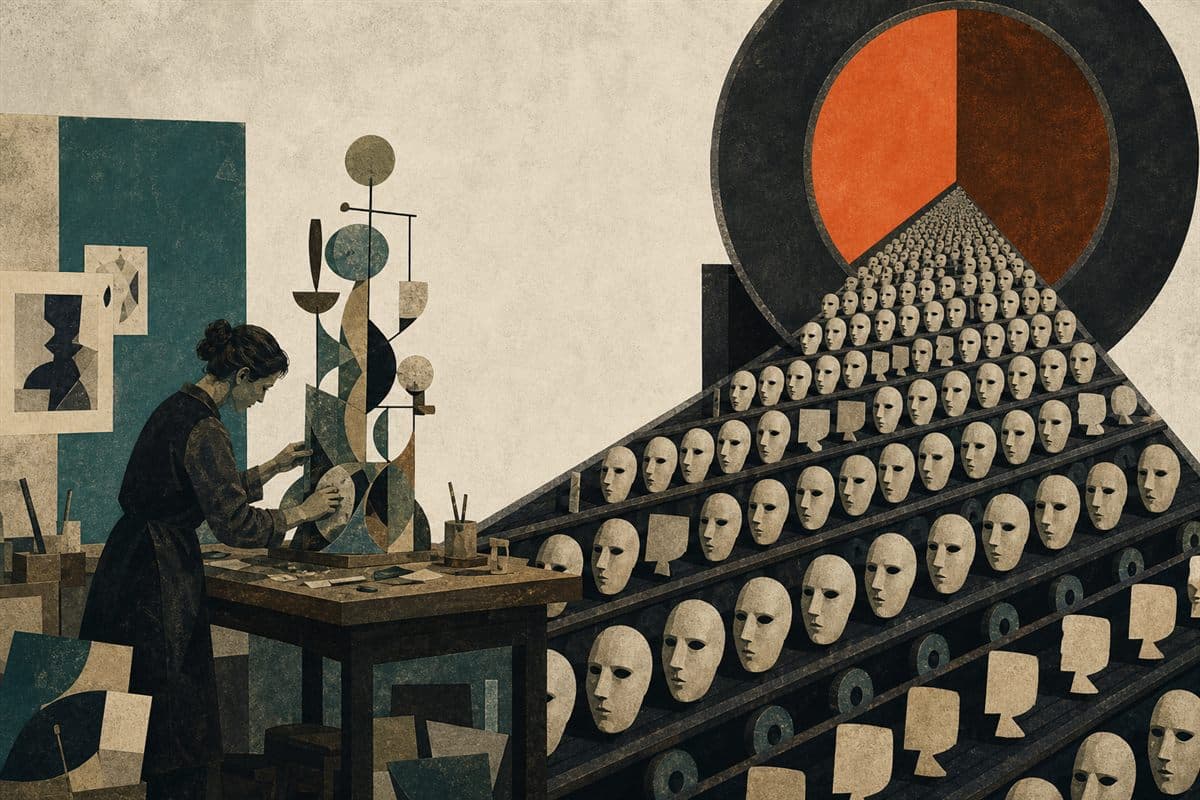
Human progress has never depended on who could repeat the loudest idea most often. It came from people who noticed what others missed, stayed with difficult questions, and made something that did not exist before. Yet much of today's internet rewards the opposite behavior with extraordinary precision.
The fastest route to distribution is often not a better argument or a more original work. It is a familiar format with a stronger emotional trigger: copy the joke, flatten the idea, perform the outrage, post the reaction, repeat before the cycle moves on.
the incentive shift
Quality compounds slowly. Reaction spikes now.
Original work has a difficult shape. It may require context before it becomes interesting. It can be uncertain, quiet, or impossible to classify on first contact. A feed optimized for immediate response reads those qualities as friction. It favors what people already recognize and can judge without stopping.
01Recognition beats discovery
A recycled format is understood instantly. A new form asks for attention before it can reward it, so the ranking system begins with a bias against novelty.
02Reaction beats reflection
Anger, embarrassment, and tribal approval produce quick signals. Thoughtfulness often produces silence first and a changed mind later, something an engagement counter cannot see.
03Volume beats development
A creator who publishes constantly generates more experiments for the algorithm than one who spends months making a single exceptional thing.
04Imitation beats risk
Once a format succeeds, thousands of copies arrive because the system has already demonstrated what it will distribute.
If the system can only recognize what worked yesterday, it will train culture to repeat yesterday forever.
refuse the default
One company's feed is not the entire internet
The most important trick of a dominant platform is convincing people that its incentives are simply how the internet works. They are not. A ranking function is a set of choices made by one company. It should not get to normalize what creativity looks like for everyone else.
At MindsNet, we want to celebrate intellectual creativity: the strange question, the serious attempt, the useful disagreement, the invention that does not yet have an audience, and the person willing to make something original before there is proof it will perform. These are not inefficient forms of content. They are how human culture moves forward.
Common questions
Do algorithms always discourage originality?
No. Algorithms can help people discover excellent work. The problem appears when ranking is dominated by immediate engagement signals, which naturally favor familiar, emotionally legible, and frequently published material.
Why does low-quality content spread so easily?
It is usually quick to understand, cheap to reproduce, and engineered for an immediate reaction. Those properties fit the speed and measurement systems of large feeds better than work that requires patience or context.
What would an internet for originality reward?
It would make room for depth, development, useful context, and long-term value. It would help people find work because it advances their interests, not merely because many others reacted to it first.