

MindsNet field notes / The attention machine
The internet is huge. A handful of companies run almost all of it.
Over a billion websites exist. Millions of people publish, build, research, and create on them. And yet, for most users, the entire internet is about five doors. That did not happen because people chose it. It happened because it was designed.
By MindsNetJuly 18, 20267 min read
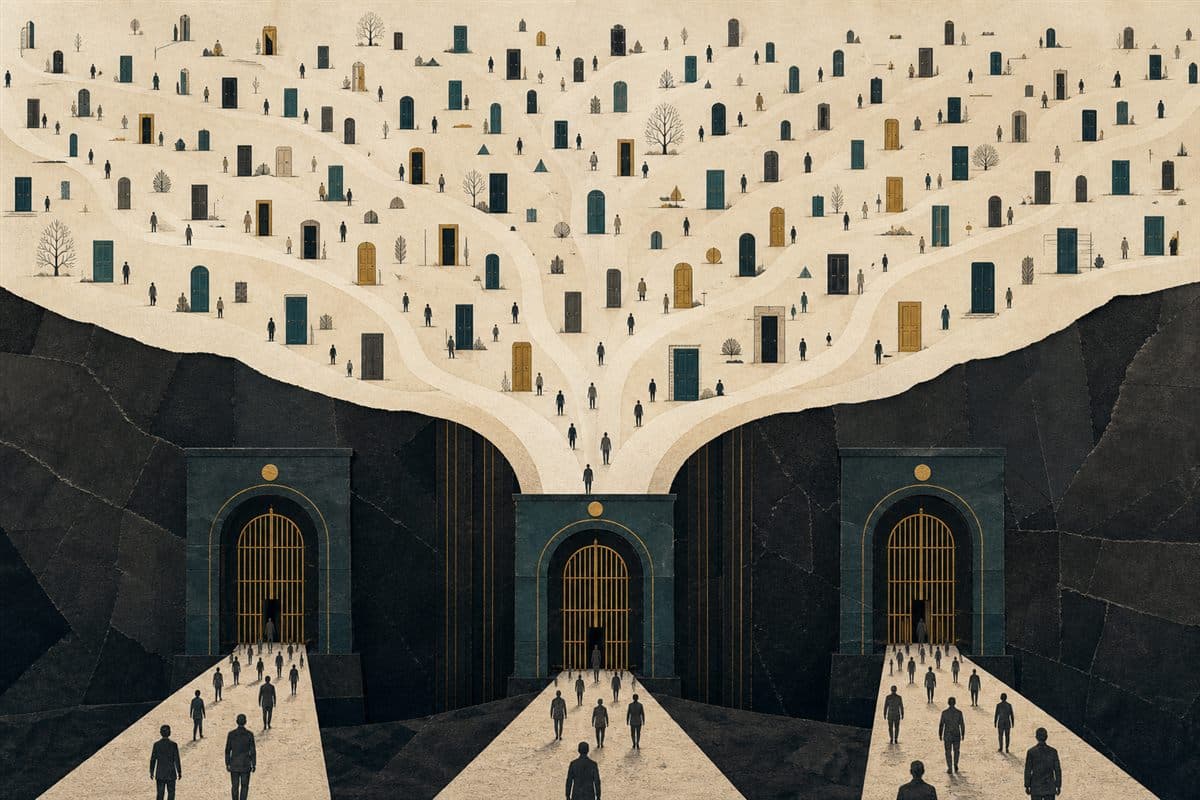
Ask someone what they did online yesterday and you will usually hear the same handful of names. Now look at what actually exists out there: independent blogs, research archives, community wikis, niche forums, open courseware, tools built by one passionate person. A staggering universe. Traffic-wise, most of it might as well be dark.
the numbers
Concentration you can measure
This consolidation is old news that keeps getting worse. Back in 2010, Wired reported that the top ten websites had gone from about a third of US pageviews in 2001 to roughly three quarters. The mobile era finished the job: study after study of app usage finds that people spend the vast majority of their phone time inside their top handful of apps, and a huge share of it inside just one or two. The long tail of the internet is longer than ever, and thinner than ever.
not your fault
Five mechanisms did this, and none of them is user preference
01Network effects
The platform where everyone already is wins by default, regardless of quality. You did not choose it over alternatives; the choice was made by everyone before you, one join at a time.
02Feeds that never end and never leave
The feed's job is to make going elsewhere unnecessary. Every scroll answered inside the app is a link not followed, a site not visited, a corner of the web that stays dark.
03Walled gardens
Platforms systematically punish the exit: links get down-ranked, external content is wrapped in in-app browsers, and creators get rewarded for posting inside rather than linking out. The open web's core gesture, the link, is treated as a leak.
04Defaults and bundling
The search box in your browser, the app store on your phone, the login button on every site: each default quietly routes billions of decisions toward the same few companies.
05Aggregated discovery
When one algorithm decides what a billion people see next, the winners are whatever serves that algorithm's goal. Discovery used to be distributed across human recommendations and links. Now it is a pipeline owned by the platforms themselves.
The most important fact about internet concentration: it is a property of the doors, not of the rooms. The web behind the doors is as big and open as ever.
why it matters
A five-door internet is a fragile internet
When most attention flows through a few ranking systems, a handful of engagement metrics quietly decide what humanity reads, watches, and argues about. Niche knowledge starves. Independent creators live and die by algorithm changes they cannot see. And you experience the strangest symptom of all: infinite choice that somehow always feels the same.
the exit
The exit is not a boycott. It is a better door.
You do not beat concentration by feeling guilty about your app usage. You beat it with doors that open outward: search that starts from your goal, exploration organized by fields of knowledge instead of engagement, and links honored as the point rather than the leak. The wide internet is still out there, one layer beneath the five doors, waiting for interfaces that lead to it.
Common questions
Do a few companies really control most of the internet?
They control most of the attention, which in practice is what matters. There are over a billion websites, but measured pageviews and app time concentrate overwhelmingly in a handful of platforms, a trend documented since at least the late 2000s and amplified by mobile apps.
Is internet centralization the users' fault?
No. The main drivers are structural: network effects, engagement-ranked feeds designed to prevent leaving, walled-garden policies that punish outbound links, and defaults that route decisions to the same companies. Individual choice operates inside an architecture built to concentrate.
How do I explore the internet beyond the big platforms?
Change your entry points: start sessions from a goal or a question rather than a feed, follow links and independent sites, and use discovery tools organized by knowledge rather than engagement, like MindsNet's free Open Internet explorer at open.mindsnet.org.