

MindsNet field notes / The attention machine
From humanity's greatest invention to its biggest manipulation machine
No invention in history put more knowledge within reach of more people. And no invention has been bent so precisely toward steering the people using it. Both things are true, and the turn happened in steps you can date.
By MindsNetJuly 18, 20268 min read
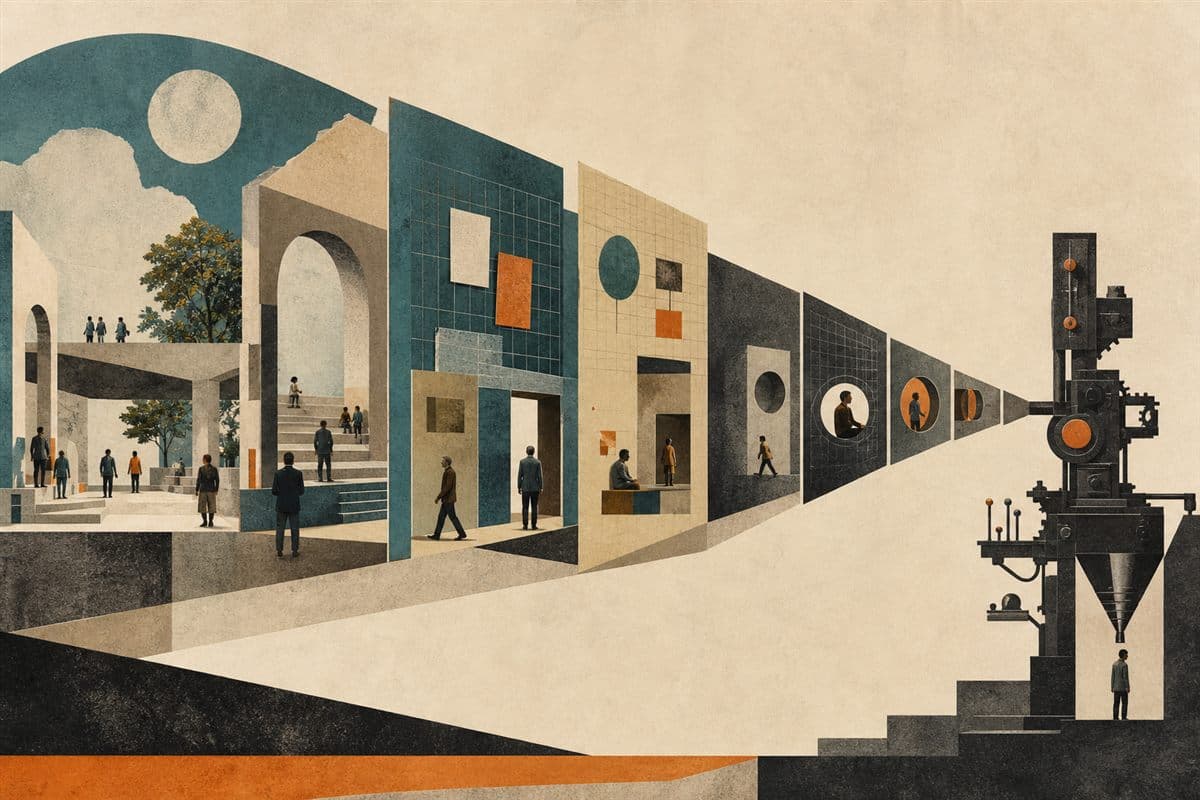
It is easy to forget what the internet actually is underneath the apps: every library, every expert, every tool, every person, reachable from a device in your pocket. A curious teenager today has access that the best-funded researcher on Earth did not have thirty years ago. That is not nostalgia. That is still there, underneath.
So how did the everyday experience of it become feeds you regret, outrage you did not ask for, and hours you cannot account for? Not through one villain. Through a business model, applied in stages.
era one
The open web: you went places
The early web was pull, not push. You typed an address, followed a link, went somewhere on purpose. Pages were made by people who wanted to say something, not to maximize a metric, because there was no metric. The unit of the web was the link: one person pointing at another's work, saying 'this is worth your time'. Navigation was a choice you made, thousands of times, and every choice was yours.
era two
The feed: places came to you
Social platforms in the mid-2000s introduced a genuinely new object: the feed. Instead of visiting ten places, one place aggregated everything and scrolled forever. It was convenient, and convenience won. But it moved the fundamental decision of the internet, 'what do I look at next?', from your hands into a product's.
era three
The ranking: the feed got an opinion
At first feeds were chronological: everything, newest first. Then, roughly in the early 2010s, platforms switched to engagement ranking. The feed stopped showing what happened and started showing what would keep you there. This is the precise moment the internet's incentive flipped from informing you to holding you, because ad-funded platforms sell time, and the ranking is how time is harvested.
By 2010, the top ten websites already accounted for roughly three quarters of US pageviews, up from about a third in 2001. The open web was consolidating into a handful of doors before the ranking era even peaked.
era four
Capture: the machine learned you personally
Modern recommendation systems closed the loop. They do not just rank content; they model you, individually, and test what steers you best. Outrage travels further than nuance because it engages harder. Autoplay chains your minutes together. The result is an internet that is spectacular at capturing intent and terrible at serving it: you arrive to check one thing and surface forty minutes later, downstream of choices you never consciously made.
Even the web's own inventor has said the system has failed the people it was meant to serve. When Tim Berners-Lee is campaigning to fix his invention, the diagnosis is no longer fringe.
the way back
The greatest invention is still in there
Here is the hopeful part: nothing about the underlying internet changed. The libraries, the experts, the tools, the people, all still reachable. What changed is the layer between you and them, and layers can be replaced. Give people a way to arrive with intent, keep the feeds out of the way, and let curiosity compound into real work, and the internet becomes the greatest invention again, one user at a time.
Common questions
When did the internet change from helpful to manipulative?
The clearest turning point is the shift from chronological to engagement-ranked feeds in the early 2010s. Ad-funded platforms began optimizing for time spent, which made steering user behavior the core business mechanic rather than a side effect.
Is the internet itself bad now?
No. The underlying internet, the knowledge, tools, and people, is more valuable than ever. The problem is the dominant interface layer: algorithmic feeds optimized for engagement. Change the layer you use and the internet underneath is still the greatest tool ever built.
What can one person actually do about it?
Control your own entry points: browse with a goal, prefer search and direct links over feeds, and use tools that strip the engagement layer, like MindsNet's free UnAlgorithm extension. Individual defaults are the one part of the system you fully control.