

MindsNet field notes / Minds under pressure
The internet is eating our minds slowly
This is not a rant about kids these days. It is a sequence you can trace in published research: memory went first, then sustained attention, then focus. The current bid is for thinking itself. Each step felt like convenience.
By MindsNetJuly 18, 20268 min read
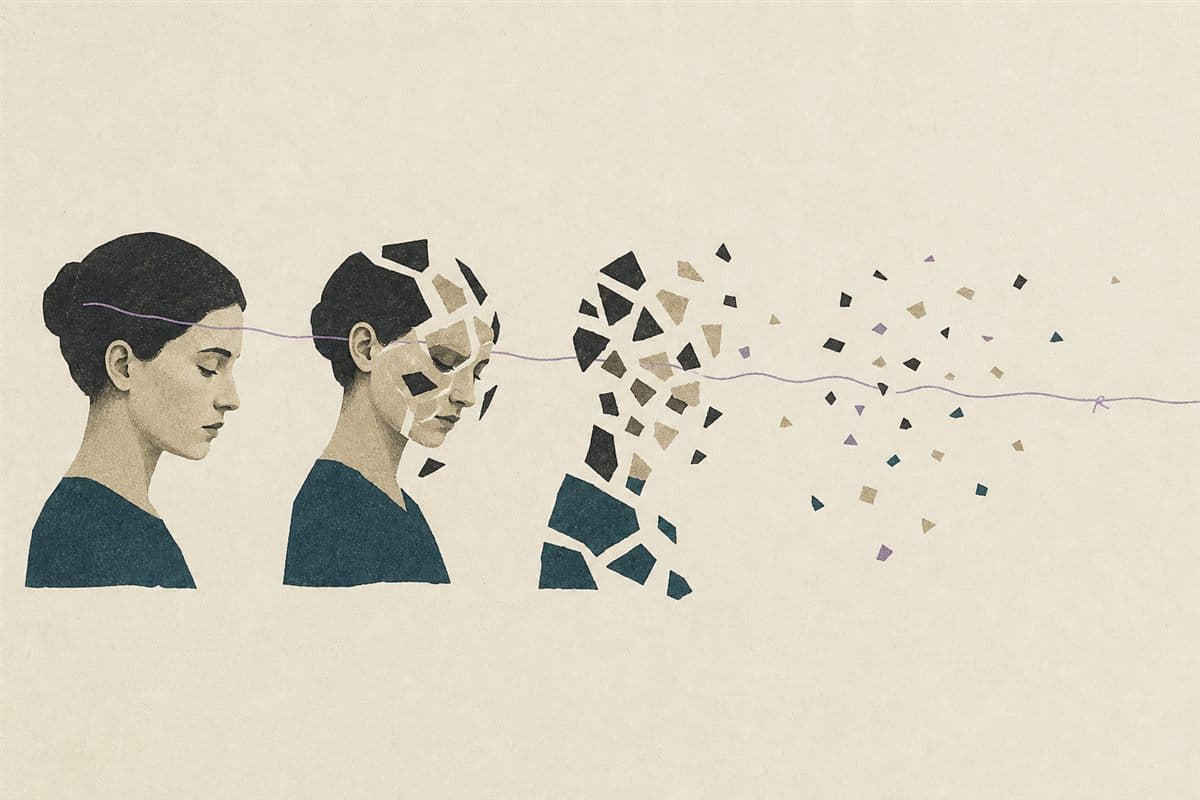
Every technology trades something for convenience. Writing traded some memory for permanence, and Socrates complained about exactly that. Mostly those trades were worth it. What is different now is the speed, the scale, and the fact that the trade is being decided by systems optimizing for their benefit, not yours.
step one
Memory went first, and honestly, that one was a fair trade
In 2011, psychologist Betsy Sparrow published research in Science describing what became known as the Google effect: when people know information is retrievable, they remember where to find it instead of the thing itself. Your brain treats the internet as an external hard drive. On its own, that is not a tragedy. Humans have always offloaded memory to books, notes, and other people. The catch is what it set up: once the phone became the memory, the phone earned a permanent place in every thinking moment. The door was now always open.
step two
Then attention, measurably
Attention researcher Gloria Mark has tracked screen attention for two decades with instruments, not vibes. In 2004, people averaged about two and a half minutes on one screen before switching. In her recent measurements, the average is about 47 seconds. And the cost is not the seconds themselves: her research also shows that after a real interruption it can take over twenty minutes to fully return to a demanding task. A day of constant switching is a day of never quite arriving.
0 sec
average unbroken screen attention in 2004, per Gloria Mark's research
0 sec
the same measure in recent years
0 min
roughly how long it takes to fully refocus on demanding work after an interruption
step three
Focus: the capacity beneath attention
Attention is a moment; focus is a capacity, and capacities atrophy. Reading researcher Maryanne Wolf has documented how heavy skimming reshapes reading itself: people increasingly bounce off long, demanding text, not because they are less intelligent but because the deep-reading circuit is trained less and the skimming circuit is trained constantly. The feed is a focus gym in reverse: thousands of daily reps of two-second judgments, zero reps of staying with one hard thing.
step four
Now the bid is for thinking itself
The newest step is the quietest. Feeds already decide what you consider: what feels important, outrageous, or normal is downstream of a ranking you never see. And now AI summaries and generated answers offer to do the comprehension too: why read, compare, and judge when a synthesis is one prompt away? Cognitive scientists call it cognitive offloading, and used deliberately it is a superpower. Used by default, it means the muscle that forms your own view of things gets the fewest reps of all. Memory was storage. This is judgment.
The pattern across all four steps is the same: each outsourcing was convenient, each one was optional at first, and each one became the default before anyone decided it should be.
the good news
Every one of these is reversible, because they are all training effects
Nothing here is brain damage. It is training, and training reverses. People who quit feeds report their reading depth returning within weeks. Focus rebuilds the way any capacity does: reps of staying with one thing that matters to you. The trick is that rebuilding requires an environment that is not actively fighting you, which the default internet is. That is an environment problem, and environment problems have tools.
Common questions
Is the internet actually making people dumber?
Not dumber in raw capacity, but research does show real shifts: the Google effect changes what we remember, measured screen attention has dropped from about 2.5 minutes to about 47 seconds over two decades, and heavy skimming trains shallow reading. These are training effects, and training effects are reversible.
Why can't I focus anymore?
Most likely because your daily environment trains switching, not staying. Feeds deliver thousands of short judgment reps a day, interruptions cost around twenty minutes of refocus each, and the deep-focus circuit rarely gets used. Rebuilding focus means changing the environment, not blaming yourself.
Is using AI to summarize things bad for thinking?
Deliberate offloading is fine and often smart. The risk is defaulting to it: if a system always chooses what you see and another system always summarizes it, the judgment muscle that forms your own view gets no practice. Keep some hard reading and some independent judgment in your week, on a topic you care about.