

MindsNet field notes / The human future
The dead internet is not a theory to fear. It is a direction to refuse.
The dramatic version says the internet is already mostly bots. The useful version asks a better question: what happens when synthetic speech becomes abundant and genuine human attention becomes the scarce resource?
By MindsNetJuly 18, 20267 min read
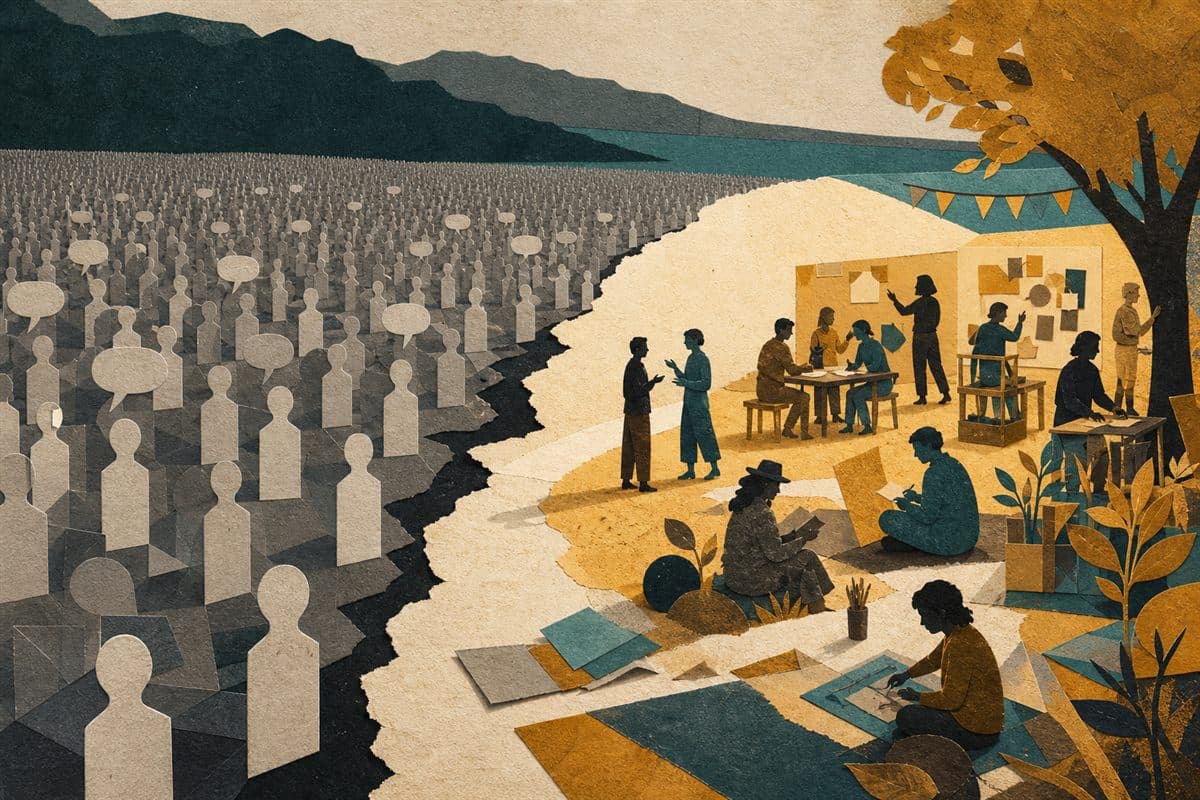
The dead internet theory claims that much of online life has already been replaced by automated accounts, manufactured engagement, and machine-generated content. Taken literally, it is difficult to prove and easy to sensationalize. Taken as a warning about direction, it is impossible to ignore.
We are entering a network where text, images, replies, profiles, and entire communities can be produced at almost no cost. The internet will not run out of content. It may run out of reasons to believe that content came from a person who meant it.
the real shortage
When expression is infinite, intention becomes valuable
A machine can generate a plausible answer, an attractive image, or ten thousand agreeable comments. What remains scarce is the human stake behind an act: someone risked being wrong, spent years learning a craft, changed their mind, showed up for another person, or made a choice that mattered to their life.
Content without context
A perfect-looking post can circulate without a traceable person, history, or reason for existing beyond filling the next slot.
Conversation without presence
A crowded thread can simulate consensus while containing very little listening, vulnerability, or possibility of a changed relationship.
Popularity without trust
Once attention can be manufactured cheaply, large numbers stop proving that real people found something valuable.
The future internet will not be divided into human content and machine content. It will be divided into spaces where human intention matters and spaces where it does not.
the alternative
Humans need somewhere to move toward
Telling people to detect every bot is not a strategy. Generation will keep improving, and suspicion is a miserable foundation for community. The better response is to build environments where identity has continuity, reputation comes from meaningful action, and tools help a person express an intention rather than impersonate one.
That is the future MindsNet is working toward. AI can help organize knowledge, remove friction, and extend what people can make. But the center of the network should remain human: human goals, human relationships, human originality, and human growth. The machine can be powerful without becoming the reason the place exists.
Common questions
Is the dead internet theory true?
Its strongest claim, that most of the internet is already automated, is not established. But its underlying concern is real: synthetic content and automated engagement are becoming cheaper, more convincing, and more common.
Does a human-first internet have to reject AI?
No. AI can be an excellent tool for people. The distinction is whether it serves a person's stated purpose or fills the environment with simulated activity designed to capture attention and imitate human demand.
How can online communities preserve genuine human presence?
By giving identity continuity, rewarding meaningful contribution over raw activity, making provenance understandable, and designing interaction around shared purposes rather than endless public performance.